Key Points:
- A flexible office space should be able to provide flexibility in working schedules as well.
- Such spaces should give rise to meaningful collaborations towards mutual interests and advantages.
- Always consider multiple options before getting the right one to get the maximum benefits.
Introduction
Most offices are built around an assumption that no longer holds up. The assumption is that work looks the same every day. It doesn’t.
Some days you need silence. Other days, you need a whiteboard, a table, and ten people arguing through an idea. Sometimes you need to host clients. Sometimes you want to bring people together for something bigger than a meeting, like a workshop or a small event.
Trying to do all of that in a space designed for only one purpose usually feels awkward. You rearrange furniture. You apologize for the setup. You book places outside the office because it feels easier.
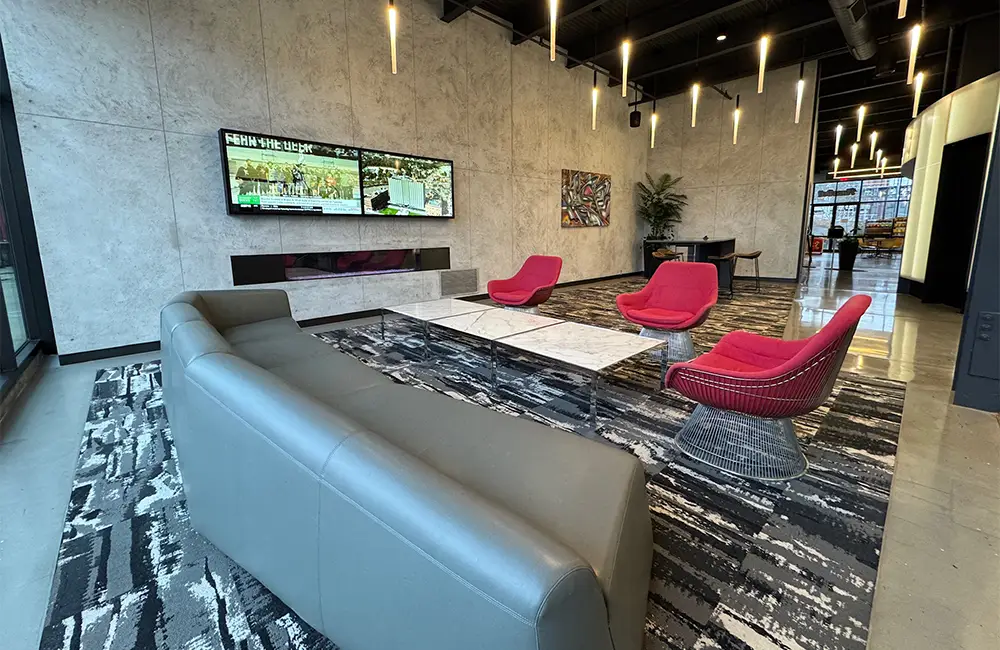
That is why more teams quietly move toward multi-purpose office spaces, even if they never call them that. They just want a flexible office space that works.
Work Feels Easier When the Space Is Not Fighting You
In a rigid office, the space decides how you work. In a flexible office space, you decide. On a regular day, people sit where they are comfortable. Some prefer open tables. Others tuck themselves away. No one makes a big deal out of it. When a meeting happens, it does not feel like a disruption. Chairs move. Screens turn on. The conversation starts. There is no “meeting room drama.” No waiting. No negotiation. That alone changes how people feel about meetings. You should also learn that modern office buildings focus on simplicity.
Collaboration Happens Without Scheduling It to Death
A lot of collaboration never shows up on calendars. It happens when someone overhears a problem. Or when two people sit down and talk for five minutes instead of booking thirty. Collaborative workspaces make those moments easier. Not louder. Not forced. Just easier. People can talk without feeling like they are disturbing everyone else. They can also step away when they need to focus. That balance is rare in traditional offices. It matters more than most teams realize.
Meetings Stop Feeling Like a Performance
Some meeting rooms feel like stages. Everyone sits stiffly. Someone fiddles with cables. Ten minutes disappear before anything useful happens. In an all-in-one business space, meetings feel more normal. You walk in. You sit down. You talk. You leave. The space does not demand formality. It supports conversation. Clients notice this, even if they do not say it out loud. Things feel smoother. More confident. Less rehearsed.
Events Become Less of a Headache
Most companies like the idea of hosting events. Fewer like the process. Finding a venue. Coordinating times. Moving equipment. Paying extra costs. When your own space can handle events, the mental load drops.
The furniture already works. The layout makes sense. You are not explaining where things are or how the room functions. Events stop being “special projects” and start feeling like part of the business rhythm.
The Space Actually Gets Used
Many offices have rooms that exist mostly in theory. They look good on floor plans. In reality, they sit empty. Multi-purpose office spaces tend to avoid this problem because nothing has only one job. A space earns its keep throughout the day.
Morning work. Afternoon discussions. Evening gatherings. Same space. Different needs. That kind of use feels practical, not clever.
You Spend Less Time Managing Logistics
This is an underrated benefit. When work, meetings, and events happen in separate places, someone is always coordinating something. Bookings. Access. Setup. When everything happens in one place, those small tasks disappear. People notice when their days feel lighter. They may not know why. But it shows in how they work.
Growth Feels Less Disruptive
Teams change. That is normal. A space that only works one way struggles with change. A flexible one absorbs it. Adding people does not mean starting over. Hosting more meetings does not create stress. Running events does not feel like a stretch. The space adapts quietly in the background.
Conclusion
Choosing a space that supports work, meetings, and events is not a bold move. It is a practical one. Multi-purpose office spaces, collaborative workspaces, and all-in-one business space setups exist because work stopped fitting into neat categories a long time ago. When the space matches that reality, everything else feels simpler.
We know that such spaces are hard to find, but not impossible, particularly when SONO 50 is here to offer the best. We have years of experience catering to people from various professions. If you want to know more about our office rentals, contact us now.
Frequently Asked Questions
What is meant by a multi-purpose office space?
It is a workspace designed to handle different needs throughout the day, including focused work, meetings, and events, without needing separate locations.
How do collaborative work spaces actually help?
These spaces make it easier for people to talk when needed and focus when needed without forcing either.
Is an all-in-one business space only for large companies?
No. Smaller teams often benefit more because they avoid renting extra spaces for meetings or events.